Everything you have to keep track of, in one place that is yours.
Meridian is a self-hosted application for running a life: the calendar and the tasks, but also the health check that comes round every six months, the certification being studied for, the medication that runs out on a Tuesday, and the week that has to be planned against the hours actually available. It is one program instead of nine, and underneath it the data is a folder of plain files you can read without it.
It runs on a machine of your choosing and answers to nobody else. There is no company behind it, no subscription, no analytics, and nothing in it to harvest.
What it looks like
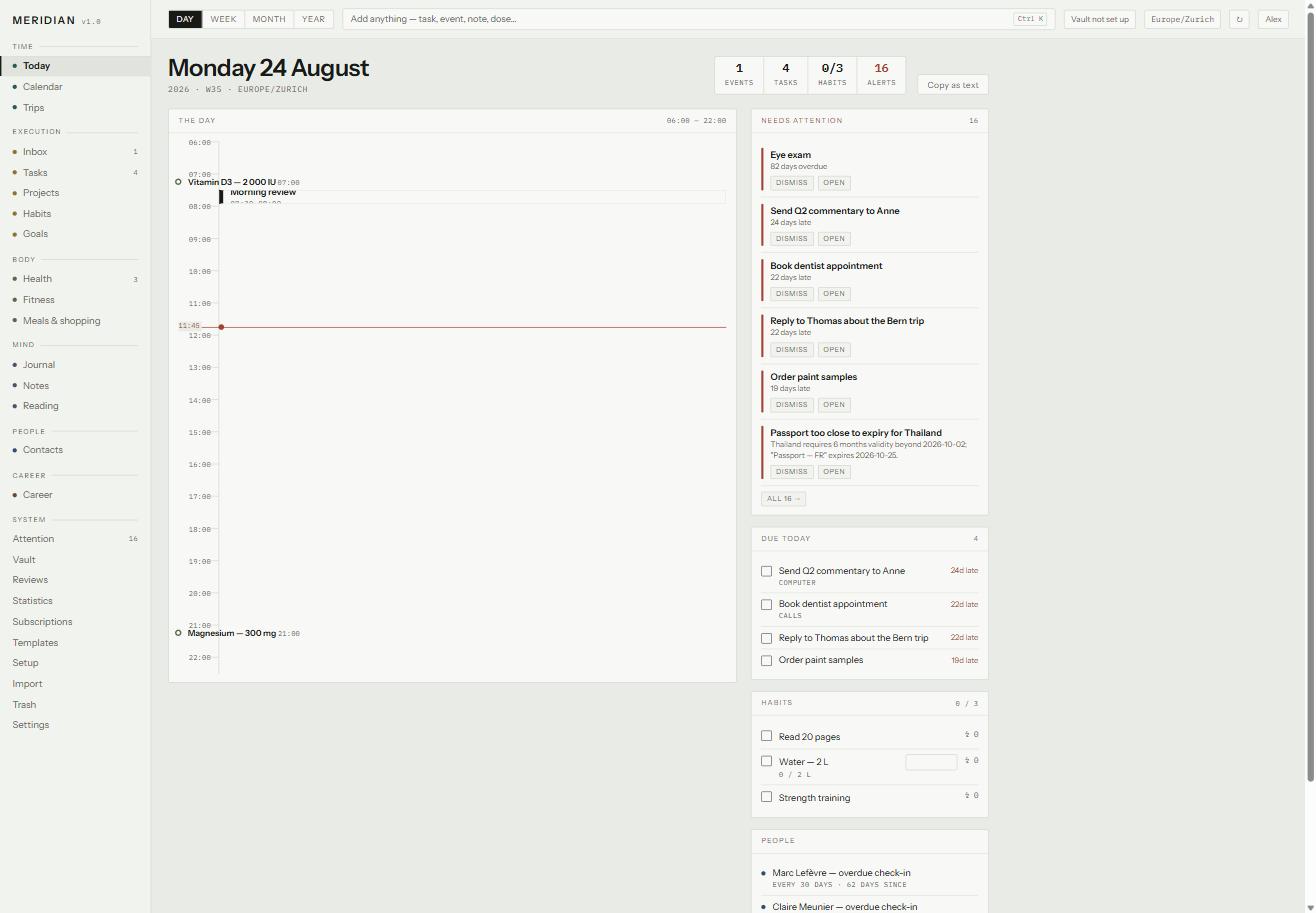
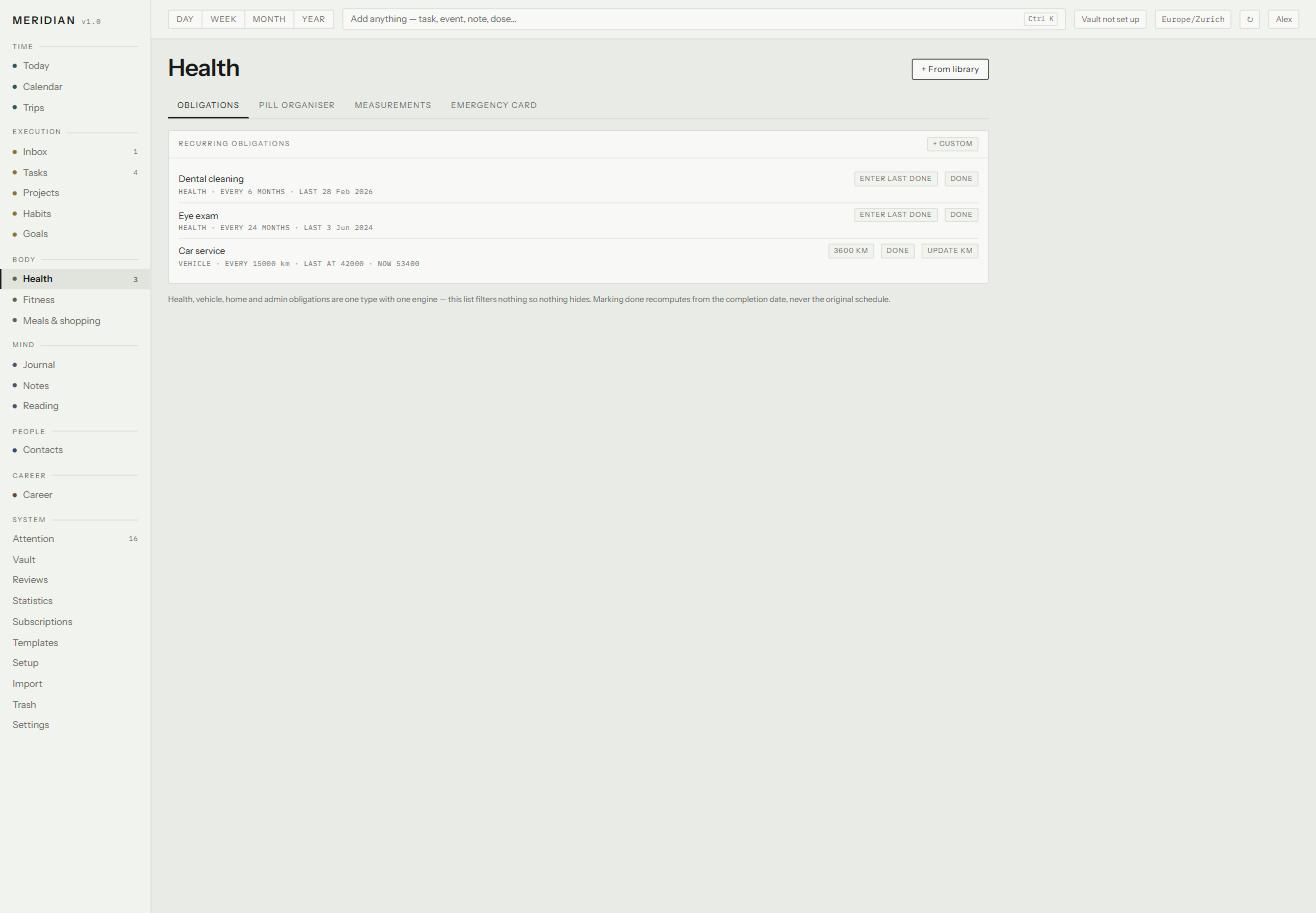
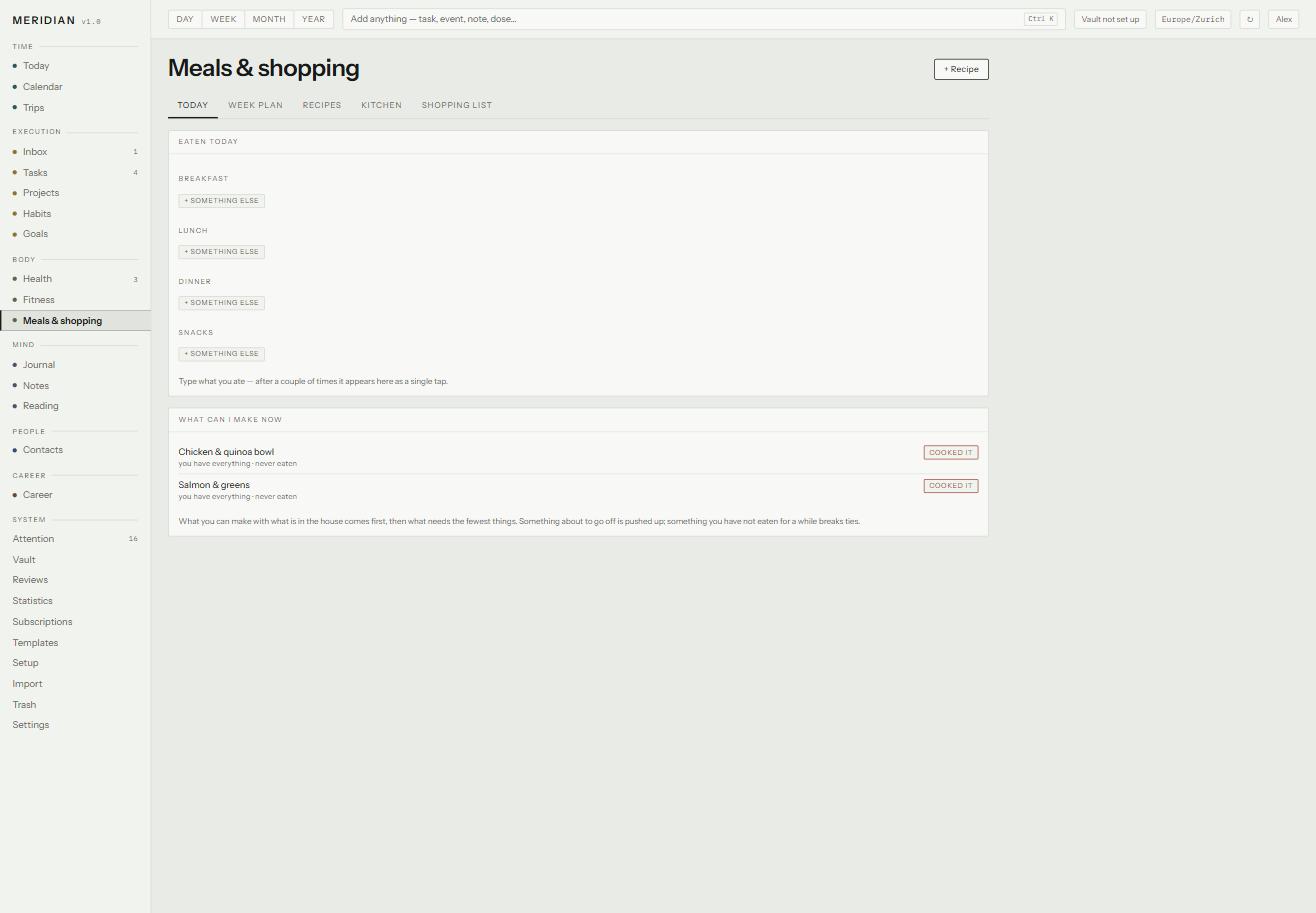
These screens are rendered from the sample data that ships with the application. Everyone in them is invented.
What it covers
Calendar, events and trips, with recurrence that survives an edited occurrence. Subscribe to it from a phone over a private, revocable link.
An inbox for anything captured in a hurry, then tasks, projects and goals — with the week planned against the hours you actually have.
Recurring health obligations, a pill organiser, measurements, training and an emergency card. Meals, recipes, the kitchen and the shopping list.
A journal whose entries are encrypted in the browser, notes that link to one another, and reading.
Contacts, with a nudge when someone you meant to stay in touch with has gone quiet.
Certifications and study — a syllabus, mock results, an error matrix, and a revision plan that replans itself when a week is missed.
How it is built
Every record is one JSON file on disk. There is no database to export from and no proprietary format to be locked into — the search index can be deleted and rebuilt, because nothing depends on it surviving.
Deleting moves a record to a thirty-day trash, with an undo. Writes are atomic, so an interrupted save leaves the previous version intact rather than half of a new one.
No analytics, no telemetry, no content delivery network, no hosted font. Typefaces and cryptography are vendored and served from the same machine as the application.
Journal entries and documents are encrypted in the browser with a passphrase that is never sent anywhere. The server stores ciphertext and has no means of reading it.
One attention feed gathers what is overdue, expiring or running low, and can be delivered by email, Telegram or web push — each opt-in, and silent on a day when nothing has changed.
A single application with no runtime dependencies, running on hardware of your choosing, for as long as you choose to run it.